
HDFC chairman Deepak Parekh on Monday said harmonisation of rules between banks and non-banks which reduces the regulatory arbitrage was one of the key factors which influenced the decision for merger between the largest home financier and HDFC Bank. Parekh, who said the merger discussions have happened over the last three weeks, noted that requirements like non performing asset recognition being at par and size-based regulations for non-bank finance companies are among the changes in landscape. Addressing a press conference after the surprise announcement earlier in the day, Parekh said the last three years have seen harmonisation in the regulations which reduce the "regulatory arbitrage" of running a separate home finance company.

'If the portfolio growth rate is higher, take this loan. If it is lower, liquidate your investments.'

The Reserve Bank of India on Friday opened a special window for cash-strapped state-owned oil firms to buy foreign exchange at market rates to provide them with more liquidity and manage exchange rates at the same time. As part of a two-pronged strategy to minimise the "potential adverse consequences for financial markets" due to the escalation in global crude prices, RBI also decided to conduct open market operations for oil bonds in the secondary market.

The NSE Nifty gained 77.85 points, or 0.71 per cent, to finish at 11,008.30. Intra-day, it shuttled between 10,821.55 and 11,035.65.

Longer-tenure FDs generally give higher returns. Nonetheless, going for a tenure higher than two to three years is not advisable.

The branch managers have come out of their glass cabins and the sellers' market has transformed into a buyers' market, but there is no end to the harassment of customers, asserts Tamal Bandyopadhyay.

'One should not invest more than 5 to 10 per cent of their overall portfolio exposure in global or international funds.'

The three day MPC meeting began on Monday and the decision will be announced on Wednesday by RBI Governor Shaktikanta Das.

On the day RBI announced a slew of measures to suck liquidity from the system to stem rupee volatility, a senior SBI official had told PTI that the bank was carrying an actual lendable surplus of Rs 20,000 crore (Rs 200 billion).

The contribution from asset management companies (AMCs) has surpassed the Rs 3,000 crore target for the creation of a Rs 33,000 crore backstop facility for debt mutual funds (MFs). The initial corpus for the Corporate Debt Market Development Fund (CDMDF) is nearly Rs 3,100 crore, according to multiple government officials and AMC executives. "The fund is operational now. "The required corpus has been raised by AMCs and the remaining part (Rs 30,000 crore) is in the form of a guarantee from the government which will be activated only in case of a credit event," explained D P Singh, joint CEO and deputy MD, SBI MF.

'We all wanted a strong Centre with a decisive mandate from the people, to allow them to take bold decisions.'

The rupee tumbled 3 per cent against the US dollar in 2024 as concerns over slower economic growth and a stronger greenback in global markets weighed, but it was among the least volatile currencies in the world and the headwinds may be less intense in the coming year.

'There has been a change in the advances mix, with the share of corporate loans decreasing.'

Investments made in liquid funds, which invest in short-term debt instruments, offer better returns for retail investors than parking money in savings bank account, says a study.
The Reserve Bank of India is exploring the use of a dollar sell-buy swap to drain liquidity from the banking system, having used the most common instruments over the last two and a half years in its fight against inflation.

'If you see another 1000-point correction, people may start panicking.'
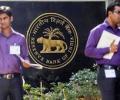
Steps announced by new RBI Governor Raghuram Rajan could attract $10 billion of forex inflows in the next three months and this could be a material near-term positive for the rupee, which has lost 20 per cent since January, the London-based banking and financial services company said.

China's foreign exchange reserves hit a new high of $ 2.85 trillion in 2010 but the 18.7 per cent increase over last year sparked concerns about the country's already excessive liquidity which was blamed for high level inflation in the country.

A combination of factors, including heavy investments in US Treasury bonds and dollar sales at a healthy profit, facilitated the Indian central bank in transferring a record surplus of Rs 2.11 trillion to the government for 2023-24 (FY24). The RBI's dollar purchases increased in FY24, supported by robust capital inflows endorsing the economy's health.

State Bank of India chairman Dinesh Kumar Khara has pitched for tax relief on interest income, saying it would help banks to garner savings that could be used for funding long-term infra projects. Currently, banks are required to deduct tax when interest income from deposits held in all the bank branches put together is more than Rs 40,000 in a year. With regard to savings accounts, interest earned up to Rs 10,000 is exempt from tax.
Flush liquidity, apart from softening short-term money market rates, poses inflationary risks.

Banks can lend credit to telecom companies as part of this process.

Many banks' profits will take a hit and a few of them could even end up being in the red because of treasury losses, triggered by a sudden spike in government bond yields in the rising interest rate cycle, notes Tamal Bandyopadhyay.

Industry houses are emphatic with the RBI pruning repo rate and CRR by 0.25 per cent each after a long nine months in its third quarter monetary policy review.

With assets depreciating over time, it will lead to large haircuts for lenders and creditors, say experts

The index could be vulnerable to a bigger fall given the present market dynamics.

When evaluating bonds, returns shouldn't be the sole factor. Pay close attention to the bond's credit rating. It should ideally be AA or higher.

Real estate loans could become NPAs for banks.

In the new decade, the scene will change because the banks till recently had been challenged by the fintechs, but the techfins have now entered the arena, observes Tamal Bandyopadhyay.

The Reserve Bank of India's (RBI's) decision to withdraw the incremental cash reserve ratio (I-CRR) is expected to benefit banks during the festival season. They are likely to increase deposit rates by up to 25 basis points (bps) in select maturity buckets. The rise in demand for funds to cover tax payments and meet quarter-end business targets could influence rate decisions by banks, according to bankers and money market executives.

Fundraising momentum is expected to accelerate further in the New Year, potentially surpassing 2024's record figures

CII said working capital limit enhancement should be accompanied by relaxing norms related to collaterals.

There will be different ways of returning the money, depending on the profile of the depositors and the amount, predicts Tamal Bandyopadhyay.

Experts say you should be certain of living in a city and locality for a long time before purchasing a home.

From the outcome of the general elections and then Union Budget to tepid corporate earnings in the September 2024 quarter (Q2-FY25), sticky inflation and Reserve Bank of India's stance on interest rates, extreme weather conditions, Indian stock markets have braved it all in calendar year 2024.
The Reserve Bank will take some action by this month end after consultations with the Indian Banks' Association.\n

The Reserve Bank of India's (RBI's) interest rate decision, West Asia conflict and trading activity of foreign investors are the key factors that will dictate investors' sentiment in the market this week, analysts said. Moreover, quarterly earnings from IT bellwether TCS, domestic macroeconomic data and movement in global oil benchmark Brent crude would also guide trends in the market. Worsening tensions in the Middle East and foreign fund outflows were the major culprits behind the equity markets sharp fall last week.

The EOW suspects a nexus between some of the accused and HDIL, whose mammoth loan defaults are said to have caused a liquidity crisis at the bank, leading to appointment of administrator by RBI and restrictions on withdrawal of funds.
